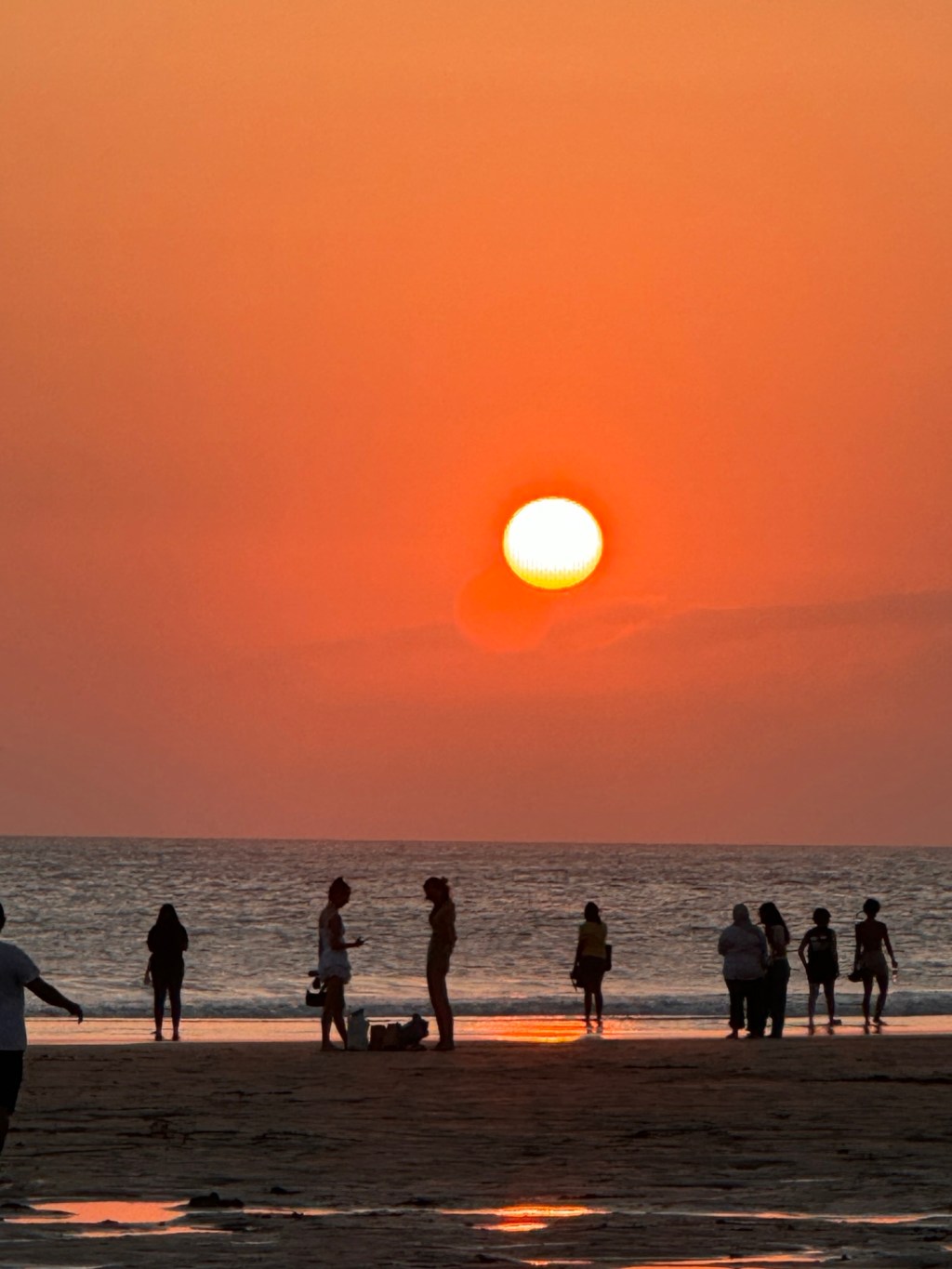
I’ve always believed that sunlight gives a place its soul. It’s not just about brightness, it’s about how it touches a city, how it moves through its streets, and how it makes you feel.
The sunlight in Tokyo for example is crisp and direct, cutting through the skyline in sharp angles. In the morning, it filters through high-rise buildings, casting long, geometric shadows onto the streets. By midday, it’s bright and relentless, bouncing off glass towers and turning the city into a maze of reflections. But as the day ends, the sun softens, slipping behind the skyline, leaving the city bathed in a hazy glow that fades almost too quickly. Here, sunlight feels efficient, fleeting, and always in motion, much like the city itself.
I was in Lisbon during summer last year, the sun is golden, as if it carries the warmth of centuries past. It pours over the city’s pastel-colored buildings, reflects off the Tagus River like liquid gold, and makes even the narrowest alleyways feel alive. The sun here isn’t harsh, it’s warm, familiar, slow-moving. Even in the late afternoon, when it stretches long shadows across the cobblestone streets, it feels like it’s in no hurry to disappear. Lisbon’s sunlight feels timeless, wrapping everything in a soft, nostalgic glow.
Stockholm’s sunlight is a lesson in patience. In summer, it stretches endlessly, painting the sky in soft hues of pink and lavender, casting a delicate glow that lasts until midnight. It’s the kind of light that never rushes, that makes you want to sit by the water and watch the way it dances on the surface. But in winter, sunlight becomes rare, a treasure that arrives late and leaves early, barely skimming the tops of buildings before slipping away. Here, the sun teaches you that light is something to be cherished, because its absence makes you appreciate it even more.
In Bali, sunlight doesn’t just illuminate, it wraps around you. It’s thick, golden, and almost tangible, pressing against your skin in a way that feels both comforting and overwhelming. In the early morning, it’s soft and diffused, glowing through temple mist. By midday, it’s intense, drenching the landscape in heat, turning rice fields into shimmering expanses of green. And at sunset, the sky melts into deep oranges and purples, the sun sinking slowly into the ocean like a final exhale. Here, sunlight feels sacred, immersive, and deeply alive.
Each city has its own sun, its own rhythm of light. And maybe that’s why no two places ever feel the same, the sun isn’t just something above us, it’s something within a place, shaping the way we experience it.
Light doesn’t just illuminate, it shapes how we experience a place. Maybe that’s why we change when we travel, not because we become different people, but because the light around us does.
 Moon River
Leave a comment