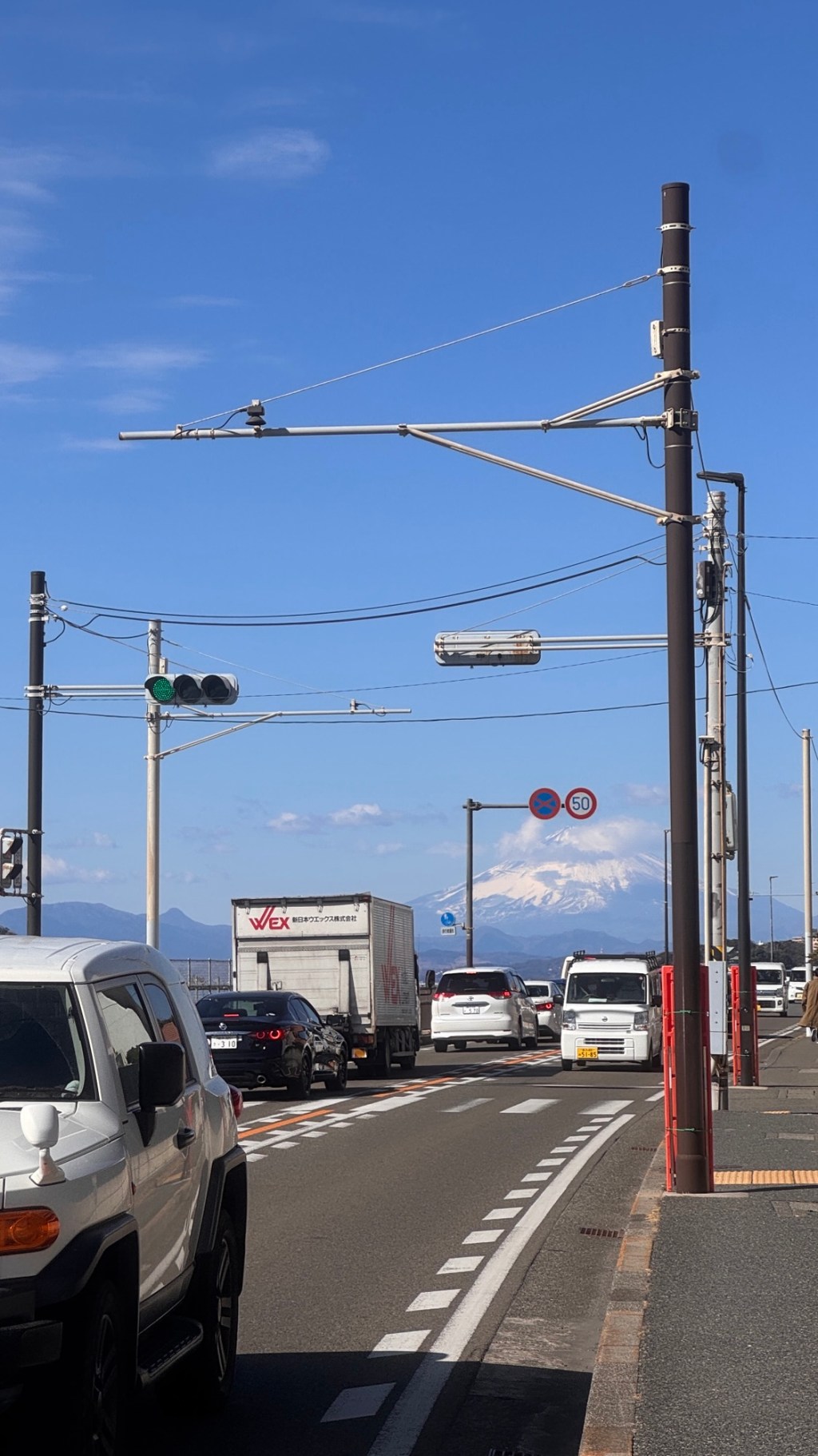
If Tokyo is a city of motion, then Kamakura is a city of pause. The moment I stepped off the train, everything felt different, slower, softer, as if time itself had stretched to accommodate the weight of history. And as I wandered through its streets, I thought about how urban design isn’t just about movement, it’s about stillness, too.
Kamakura isn’t designed for speed. The roads are narrower, winding gently toward temples tucked into the hills. Unlike Tokyo’s neon density, the skyline here is shaped by tiled roofs, wooden facades, and the quiet presence of nature. It’s a reminder that cities don’t have to compete with time; sometimes, they can exist in harmony with it.
I made my way to Kōtoku-in, where the Great Buddha sat in stillness, unchanged by the centuries that had rushed past him. Around me, tourists came and went, snapping photos, but the statue remained unmoved. Urban spaces are often designed to accommodate change, skyscrapers rise, roads widen, transit expands. But some spaces, like this one, are designed to endure. And maybe, in life, we need both: places of movement and places of stillness, spaces that propel us forward and spaces that remind us where we’ve been.
Later, I wandered to Komachi Street, where modern life slipped back in, shops, cafés, the smell of fresh-baked taiyaki drifting through the air. Even in a city so steeped in the past, adaptation found its way in. Kamakura has mastered the balance of preservation and evolution, and I wondered, shouldn’t life be the same? We hold on to the things that shape us, but we allow space for new stories, new paths.
As the sun set over the Pacific, I found myself at Yuigahama Beach, watching the waves erase footprints in the sand. In Tokyo, movement was linear, a network of destinations and connections. But here, movement was cyclical, waves retreating, then returning, never quite the same, yet always familiar.
Maybe that’s what Kamakura teaches us, not all journeys have to be about getting somewhere. Some are just about being where you are, letting the city, the moment, and the quiet spaces in between shape you.



 Moon River